
In a nutshell
With more customer accounts than there are Dutch households and almost three decades of consumer trust, bol is the dominant marketplace in the Netherlands and Belgium – and, for European sellers, one of the more direct routes into two high-spending, digitally mature markets. The opportunity comes with a condition: success depends on genuine local relevance, from localised product content to delivery promises that match Dutch and Belgian expectations.
⏱ Time to Read: appr. 5 min
In our marketplace portraits, we take a closer look at what some of the most interesting platforms in Europe have to offer for 3rd party sellers. In today’s marketplace portrait, we focus on the undisputed market leader in the Netherlands and Belgium: bol. (sponsored)
The marketplace for the Netherlands and Belgium
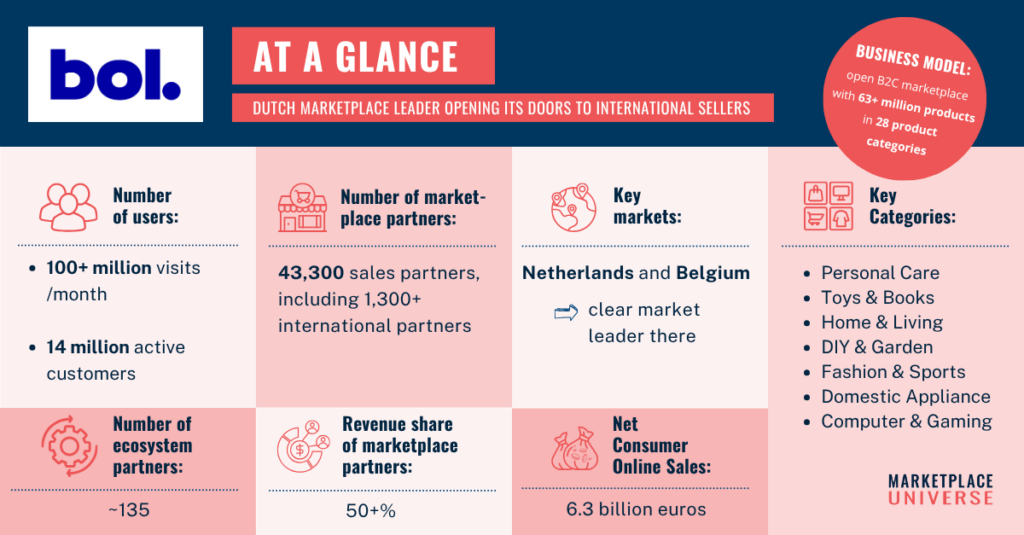
Founded in 1999, bol has evolved from an online bookseller into the leading online marketplace in the Netherlands and Belgium. Today, the platform connects more than 14 million active customers with over 43,300 selling partners. Its assortment includes more than 63 million products, while bol attracts more than 100 million visits every month.
More than half of all sales on the platform are already generated by marketplace partners. External sellers are therefore not an additional channel, but a central part of bol’s business model and future development.
A loved local brand with exceptional customer loyalty
Bol’s distinctive strength is not based on reach and assortment alone. The brand is deeply embedded in the everyday lives of Dutch and Belgian consumers. For almost three decades, bol has built trust through reliable delivery, transparent communication, strong customer service and a consistent shopping experience.
In many European markets, consumers move relatively freely between platforms and specialist retailers. In the Netherlands and Belgium, shoppers tend to concentrate more of their purchases on a small number of trusted platforms. Bol has become the preferred one-stop destination across a wide range of categories for many customers. This emotional connection and strong repeat-purchase behaviour make bol more than a sales channel: it is a loved local brand.
International brands benefit directly from this trust. Instead of building awareness and credibility in the Benelux entirely from scratch, they can reach customers through a platform that is already firmly established in local shopping habits.
One of Europe’s most digitally mature e-commerce markets
The Benelux is one of Europe’s most digitally advanced retail regions. In the Netherlands, more than 98% of internet users shop online. In 2024, all twelve Dutch regions recorded at least 80% of people aged 16 to 74 ordering goods or services online, with Utrecht reaching 91.5%.
Belgium also has strong and growing online demand. The combination of high online penetration, strong consumer spending, dense populations and advanced logistics makes the region particularly attractive. Fast delivery is often expected as standard, rather than viewed as a premium service.
For German sellers, geographic proximity provides an additional advantage. The Netherlands and Belgium can be reached through one marketplace, without establishing a completely separate commercial infrastructure for each country.
Local relevance as a competitive advantage
Bol combines marketplace scale with a strongly local approach. While global platforms often use highly centralised models, bol’s customer experience is closely aligned with Dutch and Belgian expectations.
Language, delivery promises, customer service, returns and communication all have a direct impact on trust and conversion.
Dutch consumers are particularly driven by price, convenience and speed. Belgian consumers place relatively more emphasis on trust, reliability and service. In both markets, competitive pricing remains important, but it must be supported by reliable quality and delivery promises that are consistently met.
A growing international seller base
More than 1,300 international sellers are already active on bol. Successful partners often begin with a focused assortment in one category, stabilise their operational processes and then expand step by step into adjacent categories.
Strong and high-opportunity categories include home and living, beauty and personal care, sports, DIY and garden, kitchen appliances, consumer electronics, toys, baby products, pet supplies and household essentials.
High-opportunity categories
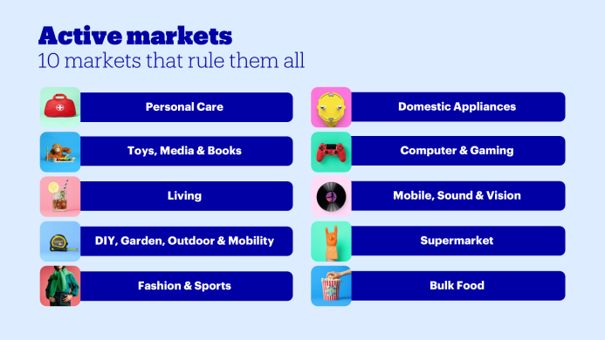
Examples of strong and high-opportunity product categories on bol.
What sellers need for a successful start
Success on bol depends on the combination of a competitive offer, reliable availability, high-quality product data and a strong customer experience. The Buy Box determines which seller offer is displayed as the default option on a product page. Relevant factors include price, delivery speed and conditions, availability and historical seller performance.
Localisation is not an optional extra. Product content should be created specifically for Dutch and Belgian consumers, rather than simply translating English or German copy. Complete attributes, clear titles, strong imagery and locally relevant terminology improve discoverability, conversion and trust.
Logistics as a conversion driver
With Logistics via bol, or LvB, bol offers a fulfilment solution covering warehousing, picking, packing, shipping and returns. Delivery speed is an important conversion lever on the platform: products with a next-day delivery promise convert considerably better than products with a two-day promise.
Bol’s fulfilment centres operate seven days a week. The network can process a range of product types, including hazardous goods in a PGS15-compliant facility, oversized products and large household appliances. Through LvB, bol takes responsibility for key performance indicators including on-time delivery, cancellations and customer cases.
Support from integrators and a broad partner ecosystem
International sellers can onboard directly with support from a business developer or work with certified integrators and agencies. Integration partners include, among others, ChannelEngine, Tradebyte, Channable, PlentyONE and JTL, agency partners are e.g. Com-Create and Front Row. Around 135 such providers are connected to the marketplace via APIs, offering support with system integration, pricing, logistics, advertising, reporting, and operational marketplace management. According to bol, sellers using such an ecosystem tool for the first time see, on average:
- 25% more GMV
- 40% fewer cancellations
- 4% fewer returns
- 42% higher delivery-promise reliability
So sellers who make use of such ecosystem and automation partners generally improve their own business performance.
Growth through data, visibility and retail media
Once a stable operational foundation is in place, sellers can increase visibility through Sponsored Products and Branded Shelves. Sponsored Products raise product visibility in search results and category environments. Branded Shelves create a dedicated branded environment and can lead customers to a Brand Page where they can discover the brand and its assortment.
Through the seller environment, partners gain access to insights on shopper behaviour, search trends, category developments, assortment performance and advertising effectiveness. These insights allow sellers to continuously optimise pricing, inventory, product selection and marketing investment. With more than 100 million monthly visits and first-party shopper data, bol supports both performance marketing and long-term brand building.
Why European sellers should consider bol
For European sellers, bol provides a relatively direct route into two high-spending and digitally mature markets. Geographic proximity can reduce logistics complexity, particularly for sellers from neighbouring countries such as Germany and France, while bol’s strong local position offers access to an active and loyal customer base.
The key advantage is the combination of local brand strength, marketplace reach, fulfillment, a broad partner ecosystem and data-driven growth opportunities. Sellers do not need to build their own local platform, awareness and infrastructure first, but they do need to serve the market locally and consistently meet high expectations around price, delivery and service.
🎧 Related listening: In episode 119 of Let’s Talk Marketplace, Tamer Memis and Hassan Imran fram Neudorff and Patricia Lay from bol discuss how the company went live on bol in under three weeks – and why in-house logistics became part of their core business.
The three key success factors
| Operational readiness | Product data quality | Customer experience |
| Competitive pricing, reliable stock availability and stable fulfilment capacity. | Localised, search-optimised titles, complete attributes, strong imagery and convincing product information. | Fast delivery, simple returns, responsive support and reliable customer service. |
Conclusion
Bol gives international sellers access to a highly digital and high-spending market in which the platform enjoys exceptional awareness, loyalty and trust. The opportunity is not limited to incremental reach. It is the opportunity to build a sustainable business in the Netherlands and Belgium through a locally embedded, loved brand. The strongest sellers treat local relevance, reliable operations and continuous data-driven optimisation as essential requirements for growth.
Want to know more? Here’s a case study from the Danish supplier of men’s accessories Trendhim about his marketplace start with bol.
Key Learnings
- Dutch and Belgian shoppers stick to a few trusted platforms – bol’s trust can be borrowed, not built from scratch.
- Over 50% of sales already come from marketplace partners: sellers are core to bol’s model, not a side channel.
- Next-day delivery converts considerably better than two-day delivery – fulfilment is a conversion lever, not an afterthought.
- Adopting one ecosystem tool alone is linked to 25% GMV growth and fewer cancellations and returns.
- NL and BE buyers differ: Dutch shoppers prioritise price and speed, Belgian shoppers prioritise trust and service.
- Translated listings underperform – genuine local content drives discoverability, conversion and trust.
- The Buy Box rewards a track record: delivery, availability and seller performance history all compound over time.
Enjoyed this article? The Marketplace Universe Weekly is our free newsletter – every Monday, the latest marketplace news, platform updates, our newest posts, and the insights that matter, delivered straight to your inbox. So you never miss a thing. 👉 Subscribe here: https://marketplace-universe.com/newsletter/