
In a nutshell
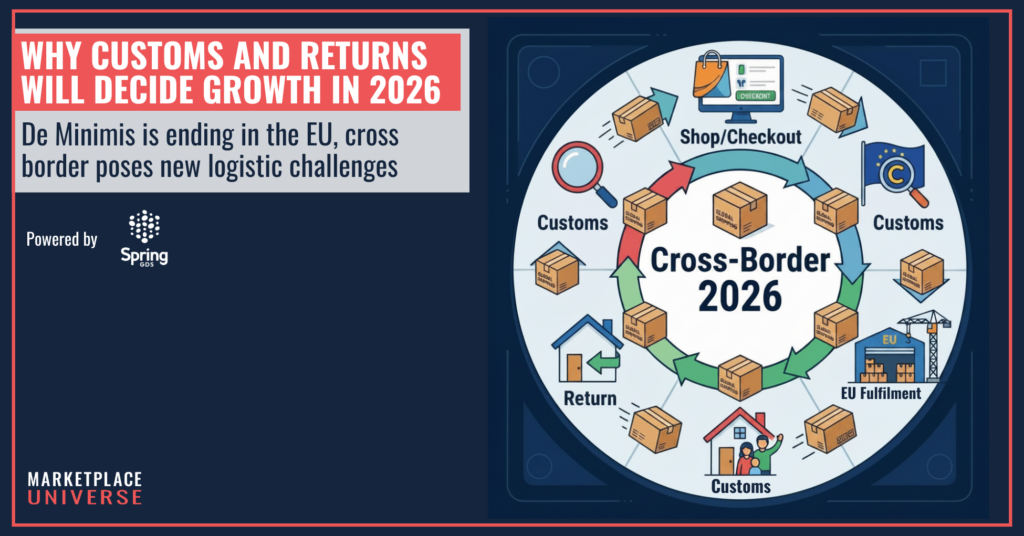
Cross-border e-commerce into the EU is entering a more demanding phase. From 1 July 2026, low-value B2C parcels from outside the EU will no longer benefit from the same duty-free logic as before: a €3 customs duty will apply per item category in parcels under €150. For merchants, the real challenge is not only the fee itself. It is the operational setup behind it: transparent checkout communication, reliable customs data, the right Incoterms, scalable fulfilment and a returns process that does not break customer trust.
⏱ Time to Read: appr. 5 min
Why Customs and Returns Will Decide Growth
Cross-border e-commerce is becoming more complex in 2026 – and on multiple levels. From 1 July 2026, the de minimis rule which has allowed goods valued under €150 to enter the EU duty-free comes to an end. Going forward, a customs fee of €3 per item category will apply – more precisely, per tariff classification (HS code). A parcel containing products with different HS codes will incur the fee multiple times. From November 2026, an additional handling fee of €2 per consignment could apply.
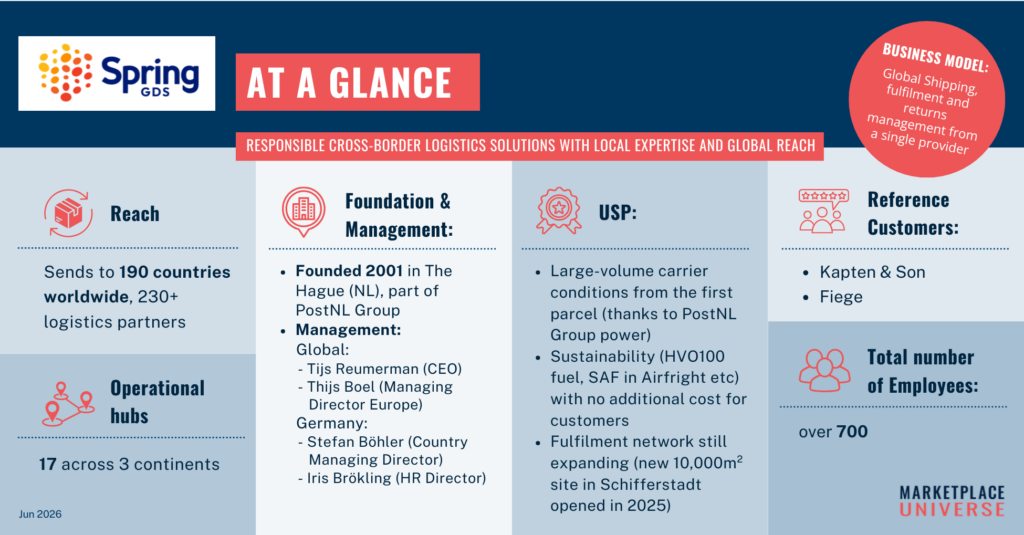
The primary payment obligation lies with the seller, not the end customer, stresses our partner Spring Global Delivery Solutions, a specialist cross-border shipping provider. Under DDP (Delivered Duty Paid), the merchant covers the fee and delivers a fully costed final price. Under DAP (Delivered at Place), the buyer pays upon receipt – This can lead to refused deliveries and higher return rates. For merchants, DDP is the better choice – but it requires adapting pricing models and checkout systems.

“The new rule does not only hit the large Chinese marketplaces that have systematically benefited from the duty-free threshold”, says Stefan Böhler, Country Managing Director Spring GDS Germany: “It affects every merchant shipping from outside the EU into the EU – regardless of product category, country of origin, or order value.”
What merchants should address now:
● Adapt checkout: customs fees must be shown as a separate line item – not buried in a generic “Taxes & Fees” field.
● Rethink Incoterms: DDP protects the customer experience; DAP shifts the risk to the end customer – with consequences for conversion and return rates.
● Review fulfilment location: a fulfilment hub within the EU is becoming an increasingly attractive option for merchants shipping regularly into the EU.
● Standardise customs processes: paperless customs clearance and complete HS code datasets are an operational prerequisite, not an option.
Who is most affected
All merchants shipping from outside the EU into the EU are affected. The UK market is particularly relevant: since Brexit, shipments from Great Britain into the EU are treated as third-country imports. The new fee hits UK merchants directly and without exception, on top of the Brexit-related customs processes already in place. The same applies to merchants from Switzerland and Norway. The logical response for many: demand for fulfilment capacity within the EU is rising.
Cross-border scaling: where the real complexity lies
The customs rule is a symptom of a larger challenge. What is manageable when shipping to one or two markets quickly becomes an operational burden with serious internationalisation. Consider different carriers, different customs requirements, different consumer expectations.
Three operational prerequisites must be in place before cross-border growth becomes predictable:
● Right carrier selection: access to a broad network with local last-mile carriers and out-of-home delivery options is essential.
● Shop setup adapted: local specifics around checkout, payment methods, and customs communication must be clarified before go-live – not after.
● Include local marketplaces: often the fastest route to becoming visible in a new market and building initial volume.
As Stefan Böhler from Spring GDS puts it: “As soon as brands internationalise, fulfilment complexity increases sharply. Only those who invest early in standardisation, integrated end-to-end processes and a flexible international warehousing strategy can scale successfully.”
Specialist providers like Spring GDS address this complexity with automated routing systems that select the right carrier for each parcel – based on format, weight, destination and service level.
International returns: cost factor or growth lever?
Many carriers treat returns as an optional add-on – more expensive than outbound shipping, negotiated separately, often handled by a different provider. For the end customer, this means uncertainty. And uncertainty costs conversion – frequently already at checkout, before the first parcel is even shipped.
What is structurally missing is a closed loop: outbound and return as an integrated, transparent unit – at the same price, through the same provider, without any break in the customer experience.
Stefan Böhler: “Customers only shop cross-border when they know that returns are easy, transparent and fast. Once this hurdle is removed, not only trust increases – so does the willingness to buy in new markets. For merchants, this means: fewer abandoned purchases and significantly faster scaling in cross-border business.”
What a closed-loop solution looks like in practice: label-in-the-box as standard, paperless return without customs forms for the end customer, transparent tracking on the return journey, and fast refunds as a prerequisite for repeat purchases.
The UK special case
For shipments to and from Great Britain, there is an additional requirement: returns are only seamless when the original outbound shipment was handled through a fully customs-compliant solution. Both directions require separate customs processes.
Many cross-border carriers offer outbound or return – rarely both as a closed, customs-compliant solution. Where this works, the process runs paperlessly on the basis of a single unified dataset. For merchants who regard the UK as a relevant market, this is the prerequisite for a returns-capable cross-border strategy.
Key Learnings
Cross-border e-commerce has not become easier in 2026. The real decisions are not made at the customs fee stage, but in fulfilment setup, carrier selection, and returns management. Those who think across all three dimensions before volume scales have a structural advantage.
● From 1 July 2026: €3 customs fee per item category (HS code) on all e-commerce imports from third countries under €150. From November 2026, an additional €2 handling fee per consignment may apply.
● The payment obligation lies with the seller. DDP protects the customer experience; DAP increases abandonment and returns risk.
● UK, Switzerland and Norway are directly affected as non-EU countries – for UK merchants, the new rule layers on top of existing Brexit customs processes.
● Cart abandonment frequently results from lack of transparency at checkout – customs fees must be shown as a separate line item.
● Cross-border scaling requires a broad carrier network, locally adapted shop setup, and strategic use of local marketplaces.
● Returns are a conversion factor: a closed loop – outbound and return from one provider at the same price – reduces abandonment and increases repeat purchase rates.
● For UK: a fully customs-compliant outbound solution is a prerequisite for seamless returns – both directions must be covered from a customs perspective.