
In a nutshell
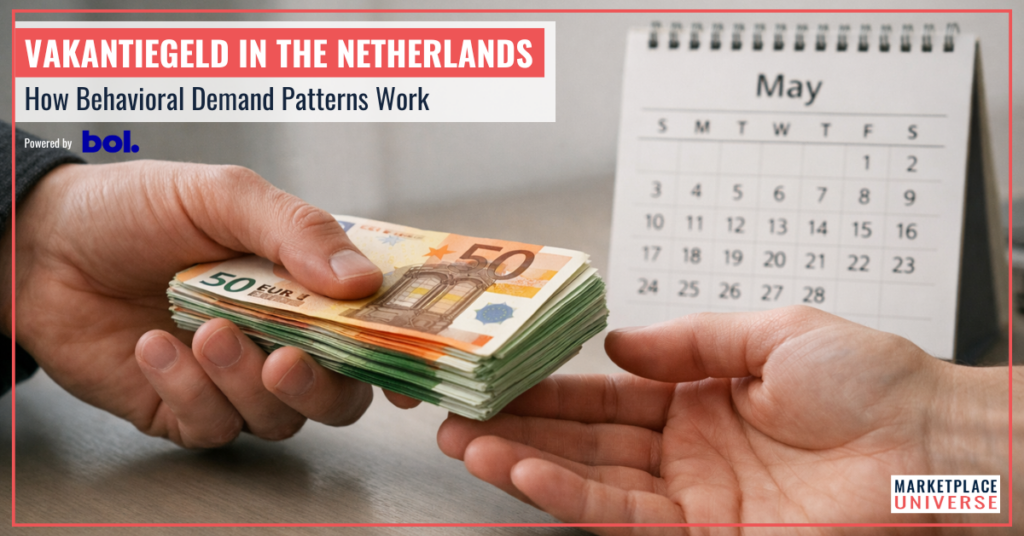
Every May, millions of Dutch employees receive their so-called Vakantiegeld – a mandatory bonus of around 8% of their annual salary. What may seem like a labour law detail at first glance turns into a clearly measurable demand boost in e-commerce. Platforms like bol observe higher basket sizes, increased spending per order, and stronger demand for higher-priced products during this period. For brands and retailers, Vakantiegeld can therefore act as a recurring, predictable revenue driver.
⏱ Time to Read: appr. 5 min
A structural demand peak – not a short-term hype
In the Netherlands, employees are entitled to Vakantiegeld – an additional payment of at least 8% of their annual salary. This amount is accrued over the year and typically paid out in a lump sum in May. For many consumers, this effectively equals an extra month’s salary.
👉 The effect is not driven by more income, but by the timing of liquidity. Larger purchases are postponed – and then bundled around the payout.
This is where the market dynamic begins. “We see a clear increase in both GMV and average basket size around the payout,” says Dennis van Evert, Manager Retail Campaigning at bol.
The demand effect is clearly visible – and not limited to a single day:
- The strongest peak occurs in the payout week
- Demand remains elevated for another two to three weeks
This is not a short spike, but a concentrated demand phase over 2–3 weeks.
Notably, this does not create new growth, but a predictable shift in demand. And the pattern is stable: according to bol, neither the intensity nor the timing has changed significantly – despite inflation, increasing competition, and evolving platform dynamics.
What consumers actually buy: bigger, more expensive, more planned
The additional liquidity does not just increase demand, it changes how consumers buy.
1. Larger baskets and broader demand
With the payout of Vakantiegeld, the number of purchases increases significantly.
👉 More importantly, the average order value (AOV) grows disproportionately, as many consumers deliberately postpone larger purchases to this moment.
👉 At the same time, they use the additional budget for purchases that would otherwise not have been prioritised.
The result: larger baskets and broader demand at the same time.
2. Winning categories: everything expensive or seasonal
According to bol, demand is particularly strong in the following categories:
• Garden furniture & outdoor products
• Premium electronics
• Outdoor toys
• Seasonal summer products
👉 The pattern is clear: Vakantiegeld is not used for everyday consumption, but for larger purchases.
“Although we do see an increase in buying and spending patterns across the platform, we see the biggest increase in higher-priced (electronics) categories, such as laptops and televisions,” Dennis explains.
Why visibility becomes critical in this phase
More demand may sound like easy growth. In practice, something else happens: competition for visibility increases significantly.
bol highlights three key levers:
1. Retail Media becomes a critical factor
More traffic does not automatically translate into more revenue. Retail Media plays a key role in staying visible during this period. In simple terms: those who don’t invest risk losing out – even when demand is strong.
2. Promotions become more aggressive
Even though overall revenue increases, promotional pressure is above average. Deals are not mandatory, but a clear differentiator.
3. Availability remains the silent winner
As in any peak phase, fast delivery and high availability remain the most important conversion drivers.
Campaigns as demand multipliers
bol actively amplifies the Vakantiegeld effect through two key campaign formats:
• Bol 10-daagse: a strongly deal-driven campaign with high discount density and strong visibility for participating products
• Summer campaign: more focused on inspiration and seasonal relevance, highlighting assortments related to holidays, outdoor, and summer
Both formats serve different purposes: The Bol 10-daagse drives short-term activation and additional purchase impulses, while the summer campaign directs demand toward seasonally relevant categories.
👉 For sellers, this means: these campaigns not only amplify existing demand – they actively structure it. As a result, they play a decisive role in which products gain visibility and ultimately benefit.
What international sellers should do
bol outlines three key success factors for the Vakantiegeld phase:
1. Align assortment strategically
Not all categories benefit equally. Demand varies – so sellers should coordinate early with their account manager to identify relevant assortments and focus areas.
2. Optimise availability and delivery times
High demand is useless if products are not available. Short delivery times – e.g. via local fulfilment solutions like LvB – remain a key conversion factor.
3. Stay price competitive
In a phase with high promotional pressure, price plays a stronger role in both visibility and conversion.
Key learnings
• Vakantiegeld is a structural demand peak in the Dutch market – not a short-term effect
• The main lever is the increase in basket size, not just order volume
• Higher-priced and seasonal categories benefit disproportionately
• Competition for visibility and deals increases significantly
• Platform campaigns further amplify the effect
• For international sellers, the timing is predictable – and therefore strategically actionable
If you want to learn more about bol, check out episode 119 of our podcast: Hassan Imran from gardening specialist Neudorff and Patricia Lay from bol explain how you can get started on bol in just 3 weeks. You can find the episode here!