
In a nutshell
Product detail pages built on static images are becoming structurally weaker on marketplaces. Platforms like Zalando are shifting their ranking and discovery logic toward engagement-driven, visual-first shopping experiences. Video content consistently outperforms static images on conversion and interaction — and AI now removes the cost barrier that once made video impossible to scale. In 2026, relying on static images alone won’t just hurt conversion. It will hurt visibility.
⏱ Time to Read: appr. 6 min
The quiet end of the static PDP
For years, the standard marketplace PDP was simple: a handful of clean product images, white background, maybe one model shot. That setup worked because marketplaces were optimised for catalogue efficiency — fast scanning, price comparison, functional buying.
That logic is breaking down.
Marketplaces are no longer just places to “find a product.” They are becoming discovery and inspiration environments, competing with social platforms for attention. And that shift fundamentally changes what kind of content performs.
Static images still matter — but on their own, they are no longer sufficient.
What Zalando is doing right now (and why it matters to sellers)
Zalando is a clear signal for where marketplace expectations are moving.
The platform has publicly shifted toward emotional commerce — shopping experiences optimised for engagement and confidence, not catalogue browsing. And Zalando has quantified the impact:
- So called “Elevated content” drives +10% higher engagement than standard product imagery
- When video is present, shoppers are up to 3x more likely to buy compared to static images alone
- Return rates decrease when richer visuals are used
That performance gap matters because modern ranking systems optimise for behaviour, not intent. Zalando’s own technology publications describe ranking models that learn from interaction signals such as viewing time, engagement and conversion.
For sellers, the implication is simple:
Static-image-only PDPs don’t just convert worse — they generate weaker signals and therefore get less distribution in search, category and discovery placements.
Marketplace Universe Insight
Static PDPs don’t fail you at the checkout.
They fail earlier — at distribution.
At the same time, Zalando is actively lowering the bar for rich content. Through AI-generated imagery, digital twins and automated production, content costs have been reduced by up to 90% and production cycles shortened from weeks to days.
Once a marketplace can scale premium visuals cheaply, the baseline shifts.
Static images alone stop being competitive — and visibility erodes.
The old dilemma: Video works — but it doesn’t scale
None of this is news to brands. Video has always converted better than static images. The real blocker has always been economics:
- Studio and crew: €80–150 per SKU
- Post-production and editing: €50–100 per SKU
- Localisation or variants: additional cost
→ €150–300+ per product video
On marketplaces with tight margins and large assortments, video was reserved for hero products — if at all. Enter AI.
From Video Production to Video Generation
AI changes the cost structure of video production entirely.
Instead of producing videos from scratch, solutions like Pixelmoda start with what brands already have: existing product images.
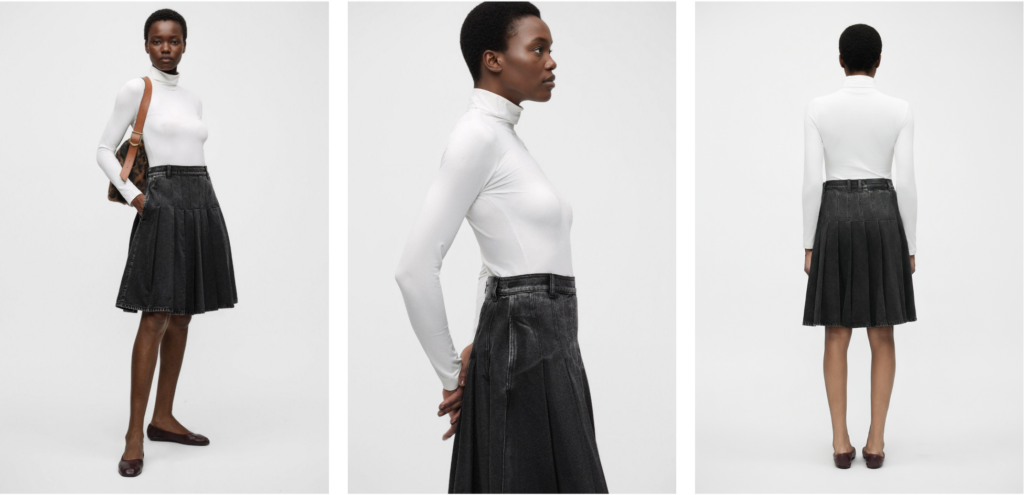
Pixelmoda’s Gianni Serazzi explained this clearly in our Marketplace Universe Webinar: four to five static images are enough to generate photorealistic motion. These “moving images” are not animations or gimmicks — they are visually indistinguishable from classic product videos, but created without cameras, sets, or editing pipelines.
That logic is grounded in a simple performance reality. In our podcast conversation, Serazzi puts it plainly: “Video is the most converting asset.”
Which is exactly why Pixelmoda’s approach starts with the images brands already have — feeding them into the AI to generate realistic motion and video sequences, without traditional video production.
The raw images are used to train the AI on the physical behaviour of the product: how the fabric folds, how it drapes, how it reacts to movement.
Once this baseline is established, the AI can generate short, photorealistic motion sequences showcasing:
- subtle garment movement
- rotation and depth
- realistic fit behaviour

You can watch the full recording of our Webinar “How AI-driven product images & videos are boosting sales and cutting costs for Fashion Brands on Marketplaces” with Pixelmoda here: Watch Webinar now
When video stops being a luxury
Using AI to generate product videos unlocks three things at once:
1. Conversion uplift
Brands adding video to PDPs see +5% to +15% higher sales, driven purely by improved conversion.
2. Radical cost reduction
AI-based video creation reduces production costs by up to 90% compared to traditional video shoots.
3. Full assortment coverage
When video costs drop from hundreds to single-digit euros per SKU, it becomes viable to add video to every product, not just a curated few.
Some marketplaces now operate with no SKU going live without video — not because it’s fashionable, but because the ROI is structurally positive.
Static images: a visibility problem
The risk of relying on static images alone is not only that fewer shoppers convert once they land on your PDP. The bigger risk is that fewer shoppers land there at all.
In engagement-driven ranking systems:
- lower interaction → weaker signals
- weaker signals → less distribution
- less distribution → fewer clicks → fewer sales
Static-image-only PDPs don’t fail dramatically.
They fade.
Marketplace Universe Insight
PDP content has moved from “nice to have” to “system-relevant”.
The new baseline for marketplace content
The takeaway from this isn’t “everyone urgently needs flashy videos.”
Instead it is: Video is no longer a premium differentiator. It’s becoming the baseline.
In a marketplace environment where visibility, ranking, and conversion are tightly linked, sticking to static images alone is no longer a neutral choice.The winning strategy for 2026 isn’t bigger budgets.
It’s extracting more performance from the assets you already have.
22.01.2026 – Written by Ricarda Eichler, Journalist and Author for OHN