
In a nutshell
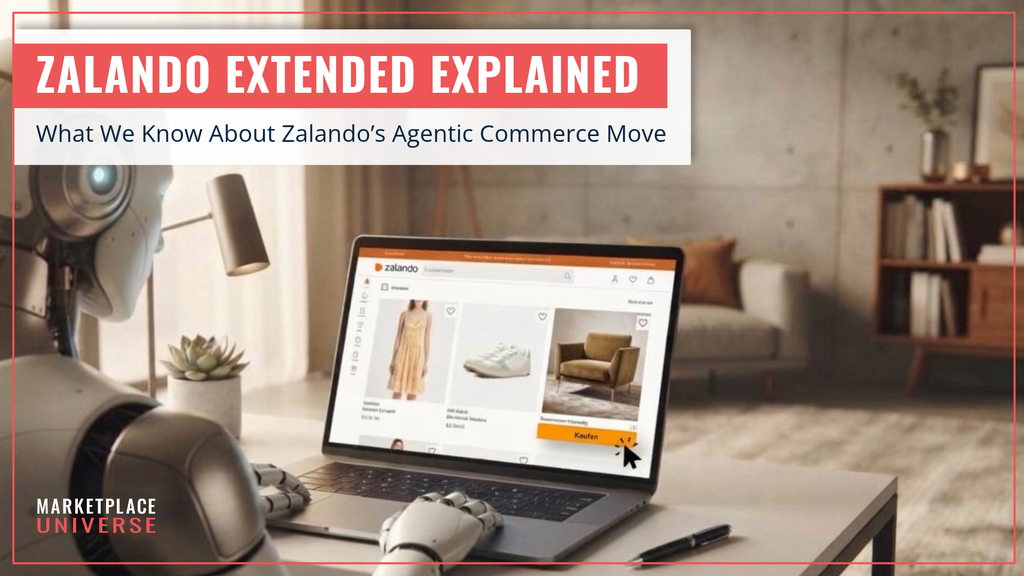
Zalando Extended adds products from other online shops to the Zalando platform, and Zalando’s own AI agent is set to buy them on the customer’s behalf. Here is what Zalando has confirmed so far, and which questions are still open for retailers.
⏱ Time to Read: appr. 6 min
Zalando Extended brings other shops’ products into the Zalando app
Zalando announced Zalando Extended on 3 November 2026, together with its Q3 results. According to the company’s release, the initiative adds products from other online shops, products Zalando does not sell itself, to the Zalando platform. Customers are meant to discover these products in the Zalando app and, at a later stage, buy them there without ever visiting the partner’s website.
This sets Extended apart from Zalando’s existing Partner Program which helps to sell directly on Zalando. Shops in Extended keep selling through their own online stores instead, while Zalando makes their products discoverable. From 2027, a Zalando AI agent is supposed to place the order on the customer’s behalf.
Zalando’s pitch to retailers is reach with little effort. According to the release, partner shops can reach Zalando customers “without complex technical integrations or changes to their logistics”, and they can advertise their products on Zalando through its retail media business.
The initiative fits the direction Zalando has been taking for years. In Q3 2026, partners already accounted for 33.6% of Zalando’s B2C gross merchandise volume, and retail media revenue grew by almost 18% year on year, according to Zalando’s Q3 results. Extended would let Zalando broaden its assortment and sell advertising around it, without buying or stocking the products itself.
Westwing is the first partner, starting with bulky home goods
The pilot partner is Westwing, the premium home and living retailer. Zalando says the cooperation began in 2026 and deliberately starts with complex categories such as bulky home goods. Over time, the release states, Extended is meant to open up a growing range of products “from shops across the internet”. Further partners, markets or a timeline for this expansion have not been named yet.
Furniture is a telling choice for a company that grew up with sneakers and dresses. Sofas and armchairs need different shipping, more product information and more complex returns than fashion, which makes them hard to add through Zalando’s own logistics. Through Extended, Zalando can offer an entire new category without holding a single item in stock.
Today a redirect, from 2027 an in-app purchase by Zalando’s AI agent
A first version of Extended is already live, though not yet as an AI-driven purchase. According to Zalando’s Q3 earnings call, customers in selected markets can currently find Westwing products in Zalando’s search results and are redirected to Westwing’s website to buy them.
The next step is planned for 2027. From then on, Zalando’s own AI agent is expected to complete the checkout on the customer’s behalf, so customers can stay in the Zalando app. It is still open which markets, product ranges and customer groups will get access first, and who the customer will legally be buying from.
Is Zalando Extended Agentic Commerce? The 2027 Version will be
Agentic commerce describes purchases in which an AI agent acts on behalf of a customer: it finds products, prepares the purchase and, once authorised, completes it. By that definition, the current version of Extended is a search integration with a link to another shop. The agentic part begins in 2027, when Zalando’s agent is supposed to buy in another retailer’s checkout. Zalando itself described Extended on its earnings call as an outbound agentic-commerce offering.
Zalando is not the first platform to try this. Amazon has been testing a similar model with Shop Direct and its “Buy for Me” feature since 2025: products from external brand websites appear in the Amazon app, and an AI agent completes the purchase on the brand’s own website. In early 2026, the feature drew strong criticism from independent retailers. As reported by CNBC and the Financial Times, many shops found their products listed on Amazon without ever having agreed to it, in some cases including items they no longer sold or never stocked. Retailers had to opt out by email, and according to the reports, returns and complaints still landed with them. Zalando is taking a different route for now, starting with a contracted partner instead of scraping shops. How Extended will work once it reaches “shops across the internet” is one of the open questions.
The numbers suggest calibrated expectations. According to CFO Anna Dimitrova, agentic traffic still accounts for less than 1% of Zalando’s total traffic, although it is growing. Zalando’s existing AI shopping tool, the Zalando Assistant, was visited by more than 22 million unique users this year, with monthly active users up fivefold year on year. AI-driven shopping is real at Zalando, and still small.
Opportunity or Power Shift? How Experts read zalando extended
With so little confirmed, it helps to look at how experienced observers read the announcement. We looked at how voices from the German e-commerce scene reacted on LinkedIn, and two of them come to quite different conclusions.
Stefan Wenzel has worked in digital commerce since 1999, including management roles at eBay and the Otto Group, and is the author of “Agentic Commerce”. For him, Extended is the real news of Zalando’s Q3 report, though not necessarily good news for partner shops. He expects them to get the sale, and presumably only a one-off first purchase, while Zalando keeps the customer and the advertising revenue. He also expects some potential tension within Zalando: its profitable B2B business earns money with exactly the logistics and integration services that Extended promises shops they won’t need. And at the scale of “shops across the internet”, Zalando might also need open standards such as Google’s Universal Commerce Protocol or the Personal Agent Protocol by Sierra and Meta in the near future.
Karo Junker de Neui, Managing Director of the digital consultancy Etribes and co-host of the Kassenzone podcast, reads the same announcement far more optimistically. She sees Westwing as a strong match and a win for both sides: Zalando broadens its offer without holding stock, and partner shops get easy access to Zalando’s customers. She also places Extended within a wider strategy of Zalando becoming visible wherever AI-driven product search begins, including tests with advertising in ChatGPT.
👉 Marketplace Universe Insight: Extended moves the start of the purchase to Zalando’s interface. If customers discover, compare and buy inside the Zalando app, the shop delivering the product becomes less visible to them, regardless of what the final terms say about data and customer ownership. For retailers, the decision to join will depend on exactly those terms.
A checklist for retailers before considering joining Zalando Extended
Zalando’s announcement leaves open most of what would decide whether participation pays off. Before signing up, retailers should get clear answers to these points:
☐ Cost: What commission or fee does Zalando charge? So far, the release only mentions retail media as an additional, optional cost.
☐ Data: Which customer and order data does the shop receive, and can it build a relationship with customers who buy through Zalando?
☐ Legal seller: Who does the customer legally buy from, the shop or Zalando?
☐ Returns and service: Who handles returns, complaints and customer service? For bulky goods, this matters more than for most categories.
☐ Participation: Do shops have to sign up actively, or could “shops across the internet” mean the agent eventually buys from any shop?
18.11.2026 – Written by Ricarda Eichler, Journalist and Author for OHN