
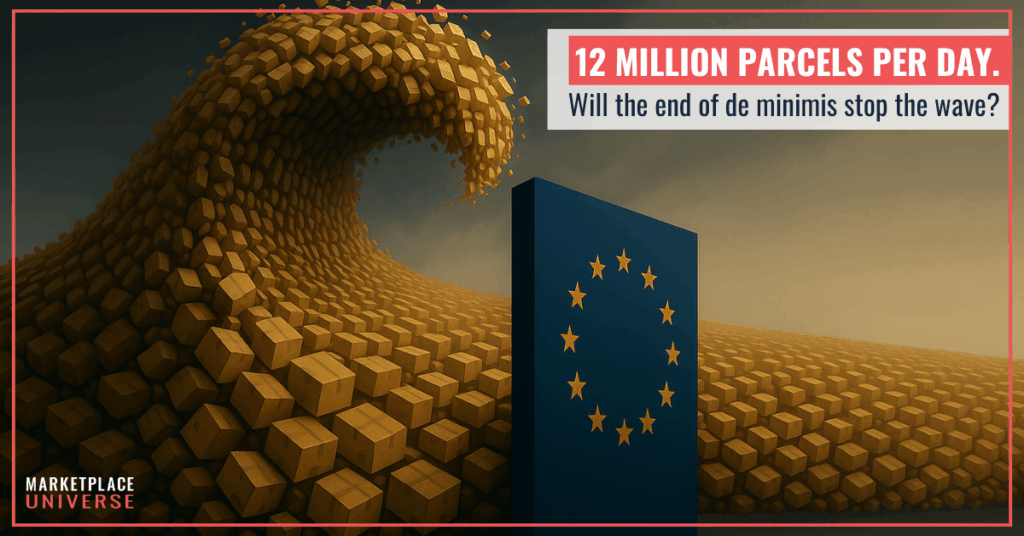
EU de minimis 2026: Will Temu & Shein Slow Down?
The EU ends the €150 de minimis exemption in 2026. Retailers expect fairer competition – but experts say Temu and Shein will adapt. What changes now?

The EU ends the €150 de minimis exemption in 2026. Retailers expect fairer competition – but experts say Temu and Shein will adapt. What changes now?
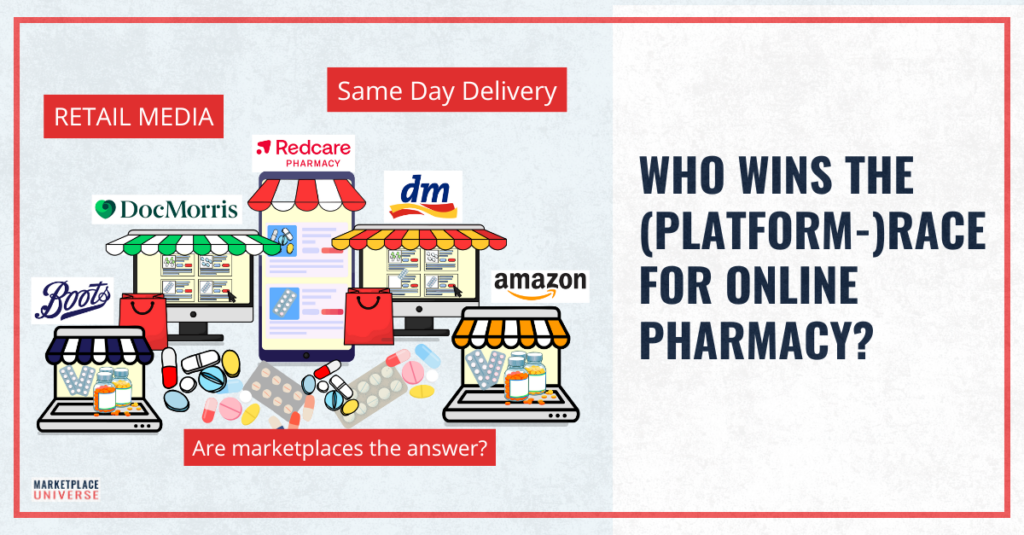
How Europe’s online pharmacy market is shifting—platforms, retail media, OTC growth & what brands should watch now.

Thanks to the EU: European REach of Online Giants Become Transparent The European Union’s Digital Services Act (DSA) has introduced a new era of transparency for online platforms, requiring those with over 75 million active monthly users in the EU to disclose their user figures twice a year, broken down by country. This data reveals fascinating insights into the online habits of Europeans and the role different platforms play across the region. Transparency REports shed a light on User Numbers By relating these user numbers to the internet-active population in each country, analysts can calculate the “penetration rate” — the percentage of internet users engaging with a platform at least once a month. This metric provides a clearer picture of a platform’s importance in specific markets. Amazon’s Uneven Footprint Among the Very Large Online Platforms (VLOPs), Amazon has long been the sole retail giant on the list. However, its influence varies significantly by country. For instance, 70% of internet users in Germany and 81% in Italy use Amazon monthly, making it a dominant player. In contrast, its penetration drops to 25% in Portugal and barely 10% in Poland. Interestingly, these figures are not static. Just six months ago, Amazon boasted a penetration rate of over 90% in Italy, while in Poland it hovered below 7%. While these fluctuations may reflect seasonal trends or reporting nuances, they also underline the challenges Amazon faces in consolidating its position in less-established markets. The inclusion of Chinese e-commerce platforms Temu and Shein in the DSA reports marks a turning point in understanding their European footprint. Temu’s Consistent Growth Temu’s penetration rate exceeds 20% across most EU countries, meaning about one in five EU internet users visits the platform monthly. Its relatively even spread suggests that Temu is approaching Europe as a unified market, deploying a standardized strategy across the continent. Shein’s Targeted Strategy In contrast, Shein has concentrated its efforts on specific “lighthouse markets” such as Spain, Italy, Portugal, and France, where it commands over 40% penetration. These are the same countries where Shein has already become the leading online fashion retailer, reflecting its focused investment in these regions. Meanwhile, Shein’s presence in markets like Germany and Poland remains comparatively modest. TikTok Shop: A Parallel Expansion Retailers are also closely monitoring the growth of TikTok Shop, which recently expanded to Ireland and Spain. Intriguingly, TikTok’s strongest markets in Europe often align with Shein’s: countries like Spain and Italy where both platforms are thriving. This overlap suggests these markets could become battlegrounds for social commerce. What’s Next? The DSA-mandated reports provide a rare glimpse into the competitive dynamics of the European online landscape. Amazon’s entrenched dominance, Temu’s pan-European approach, and Shein’s strategic focus illustrate diverse strategies for capturing market share in a complex region. As the data evolves, it will offer valuable insights into how platforms adapt to changing user preferences and regulatory landscapes. With expansion plans from TikTok Shop and growing competition among global players, Europe’s digital marketplace promises to remain a fascinating arena for innovation and rivalry. The next set of transparency reports will undoubtedly reveal even more about the shifting sands of online commerce in the EU.

Fashion Bombshell: Why Zalando acquires About You by Ingrid Lommer Zalando, Europe’s largest online fashion retailer, has announced its acquisition of competitor About You, marking a major shakeup in the European fashion e-commerce and marketplace industry. The deal, valued at €1.13 billion, includes a purchase price of €6.50 per About You share—a 107% premium on the stock’s three-month average price. The acquisition comes as Zalando and other European e-commerce fashion players face mounting pressure from rapidly growing Chinese competitor Shein, whose innovative “on-demand” production model and ultra-low pricing has disrupted the market and taken Europe by storm. A Deal Years in the Making Hamburg-based About You was launched in 2014 by Tarek Müller, Sebastian Betz, and Hannes Wiese as a subsidiary of the Otto Group. Despite an initial IPO share price of €23, the company has struggled to maintain investor confidence, with shares trading near €4 before the announcement. The economic challenges of 2023 hit Otto Group and About You hard. Once a flagship of Otto’s digital transformation, About You has struggled with exploding costs, shrinking user numbers and a more pressing need for profitability. Now, Otto Group, which held 64.7% of About You through the Michael Otto Foundation, has committed to selling its stake, along with About You’s co-founders and other major shareholders, bringing Zalando’s secured control to 73%. Zalando plans to maintain About You as an independent brand under a dual-brand strategy. While Zalando appeals to over 50 million customers across 25 countries, About You is supposed to continue catering to a younger, style-driven audience through its trend-setting and influencer-heavy platform. SCAYLE: A Key Asset in the Deal A significant component of the takeover is SCAYLE, About You’s B2B e-commerce software platform, which has established itself as a fast-growing and profitable SaaS solution in the fashion and lifestyle segment. SCAYLE provides tailored e-commerce infrastructure for over 200 online shops in Europe and North America. As part of the deal, SCAYLE will be integrated into Zalando’s existing software environment, complementing its ZEOS platform. Together, these systems are supposed to form a unified multichannel ecosystem designed to streamline operations for brands and retailers, offering a seamless platform for logistics, payments, and e-commerce services. Synergies and Strategic Alignment Zalando expects long-term annual synergies of approximately €100 million, leveraging About You’s strengths in both the B2C and B2B sectors. The integration of SCAYLE alongside ZEOS represents a pivotal part of this strategy, providing brands and retailers with a unified platform to optimize their multichannel operations. The Co-CEOs of About You—Müller, Betz, and Wiese—will retain their leadership roles. “This partnership creates something truly unique: two distinct B2C brands tailored to specific customer needs while combining our strengths in B2B to offer comprehensive solutions,” said Tarek Müller. What the deal will mean for the marketplaces of both Zalando and About You, if selling partners will benefit from it, and how the platforms will change due to the merger, is yet unknown. We have asked both Zalando and About You for comments and will update this article as soon as we learn more. Market Response The announcement sent About You’s stock soaring by 64%, nearing the offered price of €6.50 per share. However, Zalando’s shares fell by 7.5%, reflecting investor caution over the significant investment amid a challenging retail landscape. Navigating a Changing Market The acquisition underscores Zalando’s determination to strengthen its foothold in the €450 billion European fashion and lifestyle market. While the entire fashion industry has struggled in 2023 due to economic uncertainties and Shein’s meteoric rise, this deal signals Zalando’s commitment to scaling its operations. Especially SCAYLE could be the crown jewel of the deal for Zalando’s future as a e-commerce tech company. For Otto Group on the other hand, the sale of About You and SCAYLE represents a difficult yet pragmatic decision. By cutting off About You, it rids itself of a struggling sub-company and the huge investments it would need to stay competitive in a difficult market. But with SCAYLE it loses an important and very promising tech component which might have turned out to be vital for Otto’s future success. As the transaction progresses, expected to close by summer 2025 pending regulatory approval, the European fashion e-commerce sector braces for further disruption. Whether this strategic consolidation will be enough to fend off competition from agile newcomers like Shein remains to be seen, but it marks a bold step forward for Zalando in a turbulent industry landscape.
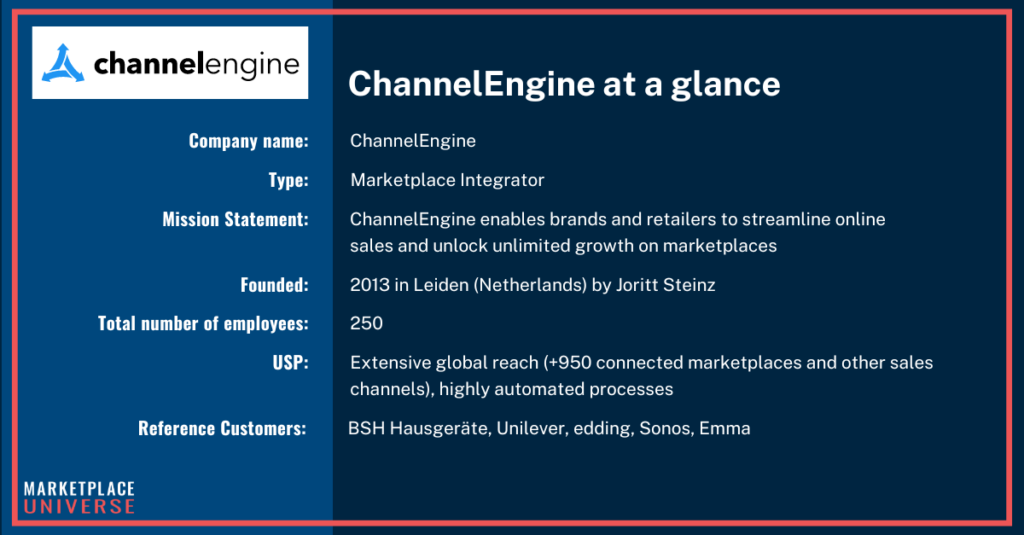
Discover ChannelEnginge Global Marketplace’s evolution, its defining KPIs, and retailer support services in this in-depth marketplace portrait.
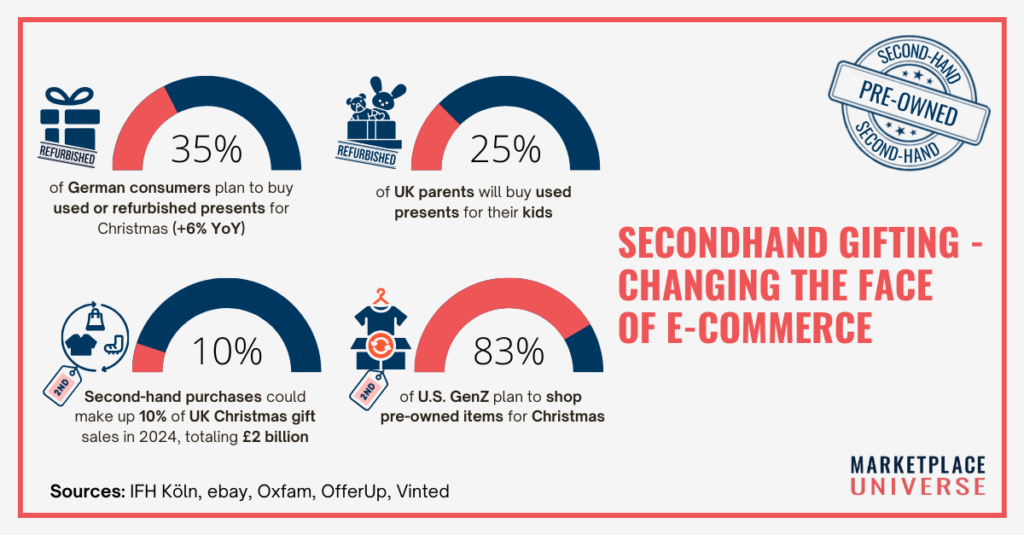
Why “Pre-loved” gets a lot of love this season Secondhand Christmas gifting is no longer a niche activity—it’s becoming a significant part of holiday shopping around the world. Driven by shifts in consumer attitudes, economic factors, and the growing focus on sustainability, the market for pre-loved goods is seeing strong growth. Platforms like eBay, Vinted, and Back Market are leading this transformation. Or, as eBay Germany’s Managing Director Saskia Meier-Andrae, recently put it in an interview with Marketplace Universe: “The stigma around secondhand is gone. Today, pre-loved is sexy.” The Global Growth of Secondhand Gifting Across the U.S., UK, and Germany, secondhand purchases are emerging as a defining feature of the 2024 holiday shopping season. In the United States, a recent study by OfferUp shows that 68% of shoppers plan to allocate part of their gift budget to secondhand items, with Gen Z leading the charge at 83%. Electronics, sporting goods, and furniture are among the top categories. Nearly three-quarters of U.S. consumers (74%) believe secondhand gifting is more accepted this year, reflecting broader cultural shifts. In the UK, the new “Recommerce Report” estimates that £2 billion will be spent on secondhand gifts this year, representing 10% of all festive purchases. Books, toys, and board games rank among the most popular choices. Many UK consumers value the uniqueness of pre-loved items, with 73% saying they would consider buying secondhand if they found something truly distinctive. Germany mirrors these trends. Research from ECC Köln and eBay Germany reveals that 35% of German shoppers plan to give secondhand gifts this year, an increase from 29% in 2023. Among 18- to 29-year-olds, the figure rises to 56%, with affordability and quality emerging as top priorities. Why Secondhand Appeals to Shoppers The rising interest in secondhand gifts is linked to several key factors: Marketplaces at the Forefront of the Trend The secondhand Christmas boom wouldn’t be possible without the platforms facilitating it. eBay remains a dominant force in Europe, with a GMV of $30 billion in 2023, according to data from the E-Commerce Database (ECDB). The platform’s established reputation makes it a popular choice for shoppers seeking everything from vintage fashion to electronics. Meanwhile, Vinted is rapidly gaining ground. With its global GMV projected to reach $11.1 billion in 2024, the peer-to-peer platform is especially popular in markets like the UK and Germany. Its focus on ease of use and affordability appeals to younger, budget-conscious consumers. Specialized platforms are also playing a key role. Fashion-focused sites like Vestiaire Collective and Depop cater to niche audiences, while electronics marketplaces such as Back Market and Refurbed focus on professionally refurbished goods. In Germany, ECC Köln’s study highlights a growing trend toward professionalization, with 38% of retailers now specializing in refurbished products. What Does Secondhand Mean for Peak Season? Secondhand Christmas gifting is clearly gaining momentum, but its impact on traditional holiday shopping is still evolving. The customers are starting to own the trend (especially younger shoppers). But retailers and brands are still struggling with finding the right strategy for the pre-owned market. Until they found it, the secondhand turnover will fall to specialist players who have mastered a profitable second hand business.
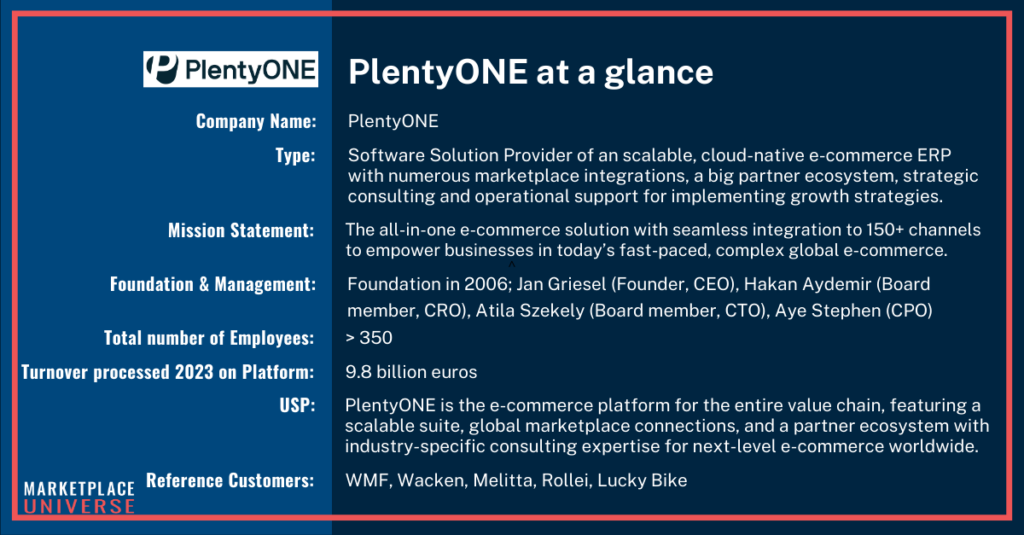
Discover the marketplace service provider landscape with our service provider portraits. Today: bestSolutions

Pia Nolte left Breuninger for fashionette. René Herzig left Sennheiser to join Paulmann Licht. Janina Kargoll moved from C&A to Logoco’s Naturkosmentik. Lots of job changes in October!
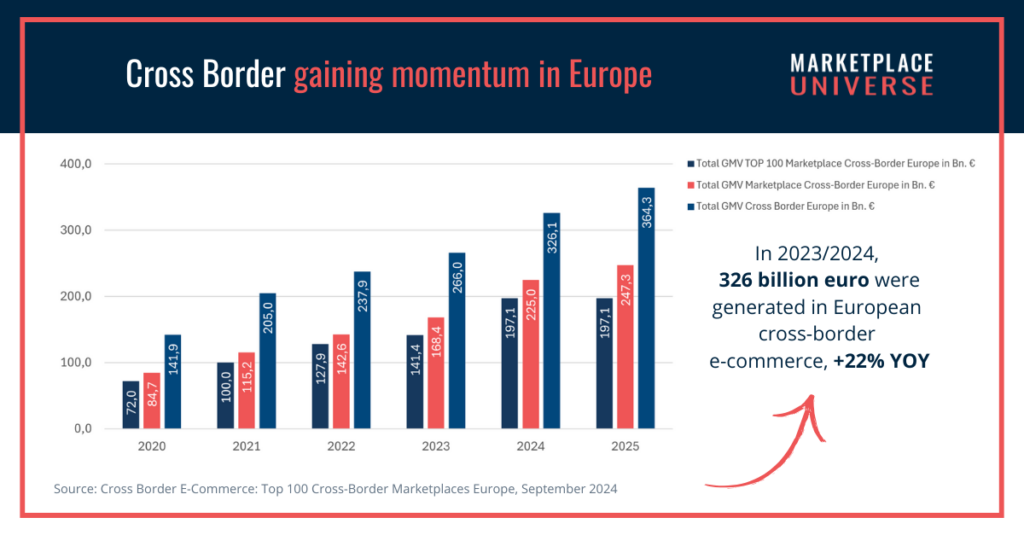
Why Internationalization Has Been the Key Growth Factor in 2024 One of Marketplace Universe’s key predictions for marketplace business development in 2023 and 2024 was clear: internationalization would drive growth, even in a challenging economic environment. Now, as we review the first set of available data, we can say confidently: our predictions were spot-on. While e-commerce markets across Western Europe have faced economic headwinds in 2023, European cross-border sales have continued their upward trajectory. This trend is highlighted by recent data from “Cross-Border E-Commerce“: In 2023/2024, European cross-border e-commerce generated €326 billion, reflecting a 22% year-on-year growth. The numbers show that cross-border commerce remains resilient, unaffected by both the pandemic-fueled boom and the subsequent economic slowdown that has dampened national e-commerce growth rates. Internationalization is here to stay. What’s Driving this growth? Marketplaces! Marketplaces are the primary engine behind cross-border growth. In 2023/2024, a remarkable 69% of all European cross-border sales took place on online marketplaces. According to CB Commerce, the majority of this revenue (over 60%) and the highest growth rates come from the top 10 platforms active in Europe: Amazon, eBay, AliExpress, Etsy, Temu, Vinted, OLX, Shein, Discogs, and Zalando. However, many mid-tier platforms are also capturing significant cross-border revenue, benefiting from this ongoing trend. In challenging economic times, cross-border business on online marketplaces has proven to be a strong growth area. But which industries are making the most of it? Cross-border e-commerce is particularly prominent in smaller European economies, where it makes up a larger percentage of online sales. Markets such as the Netherlands, Belgium, Denmark, Austria, Czechia, and Slovakia benefit more robustly from cross-border sales than larger economies like Germany or France, which are slower to capitalize on the trend. The UK, with its close ties to the U.S. market, has a comparatively weaker share of cross-border turnover within Europe, standing as an exception to the trend. A deeper Look: Cross-Border in Germany To illustrate this, let’s examine the German market, the largest in the EU. Historically, German e-commerce has been slower to embrace cross-border opportunities, but a shift has begun over the past five years. According to a recent ECDB study: Export net sales from German online stores grew by 41% between 2019 and 2023. However, these figures remain modest, indicating substantial growth potential. In 2023, cross-border sales represented only about 5% of Germany’s total e-commerce turnover. German e-commerce companies also have untapped potential on marketplaces. Their export gross merchandise volume (GMV) comprises just a quarter of Germany’s online cross-border turnover. This limited reach is due in part to a reliance on nearby markets—most German cross-border sales go to Austria and Switzerland. This narrow focus suggests an opportunity for German companies to expand into new, untapped regions and capture more cross-border growth. Conclusion: The Future of Cross-Border Growth Lies in Marketplaces As we move forward, it’s clear that internationalisation will continue to be a defining force in the European e-commerce landscape – and that cross border grows on marketplaces. Despite economic uncertainties and slower growth in traditional e-commerce sectors, internationalization offers a vital pathway for expansion, especially on online marketplaces. Companies that prioritize cross-border strategies and leverage marketplace platforms will be best positioned to thrive in this evolving landscape. By expanding beyond familiar markets and tapping into emerging opportunities across borders, businesses of all sizes can unlock new streams of revenue and strengthen their resilience in the face of economic challenges. For those ready to take the leap, the potential rewards are vast—and the time to act is now. Your starting point for your Cross Border marketplace journey: Our Marketplace Country Quadrants To help you identify the most interesting marketplaces for your internationalisation endevour, we have started comprising our “Marketplace country quadrants”. This carefully researched and regularly updated infographics inform about the most relevant marketplaces in a certain country market, sorted by industry. So far, we have published country quadrants for UK, Germany, France, Spain, Italy, the Netherlands, and Switzerland. Check out our country quadrants here.
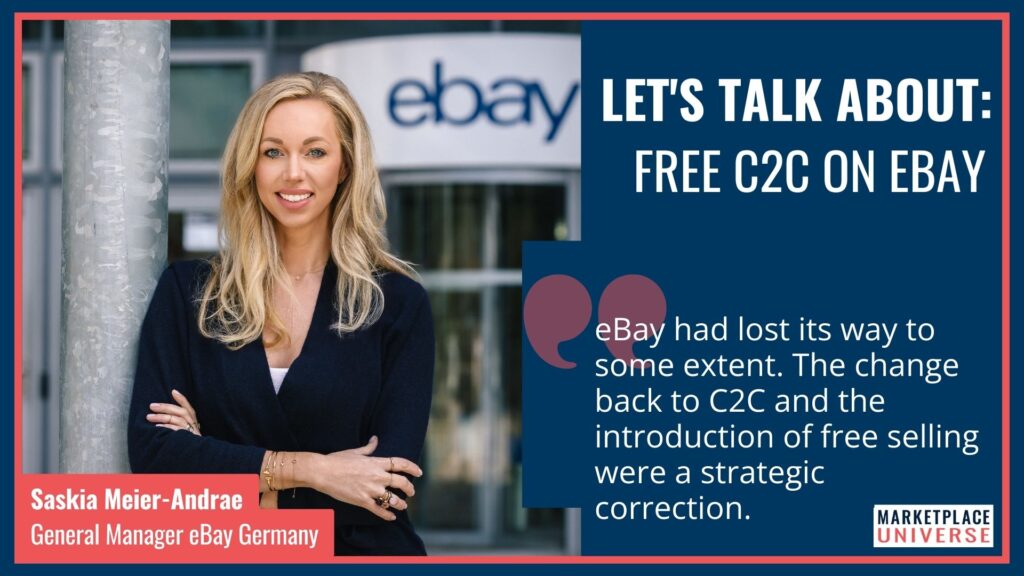
eBay’s Free C2C Strategy: How a bold move in Germany boosted private sales and expanded to the UK. Insights from eBay’s leadership.
You need to load content from reCAPTCHA to submit the form. Please note that doing so will share data with third-party providers.
More InformationYou are currently viewing a placeholder content from Active Campaign. To access the actual content, click the button below. Please note that doing so will share data with third-party providers.
More InformationYou are currently viewing a placeholder content from Vimeo. To access the actual content, click the button below. Please note that doing so will share data with third-party providers.
More InformationYou are currently viewing a placeholder content from YouTube. To access the actual content, click the button below. Please note that doing so will share data with third-party providers.
More InformationYou need to load content from reCAPTCHA to submit the form. Please note that doing so will share data with third-party providers.
More InformationYou are currently viewing a placeholder content from Instagram. To access the actual content, click the button below. Please note that doing so will share data with third-party providers.
More InformationYou are currently viewing a placeholder content from Google Maps. To access the actual content, click the button below. Please note that doing so will share data with third-party providers.
More InformationYou are currently viewing a placeholder content from Google Maps. To access the actual content, click the button below. Please note that doing so will share data with third-party providers.
More InformationYou are currently viewing a placeholder content from reCAPTCHA. To access the actual content, click the button below. Please note that doing so will share data with third-party providers.
More InformationYou are currently viewing a placeholder content from X. To access the actual content, click the button below. Please note that doing so will share data with third-party providers.
More Information